

After a decade of false starts, drone delivery appears to be finally taking off. Buoyed by new FAA rules and improved hardware, just the past few weeks have seen big moves like Wonder and Zipline’s massive Texas-wide partnership or yesterday’s announcement that Wing was expanding its deal with Walmart to include eight new Houston-area locations. While much of the news tends to have a rather Sunbelt focus, Wing did also recently share its plans to expand to Memphis, New Orleans, Philadelphia, Phoenix, San Diego, the SF Bay Area and Salt Lake City.
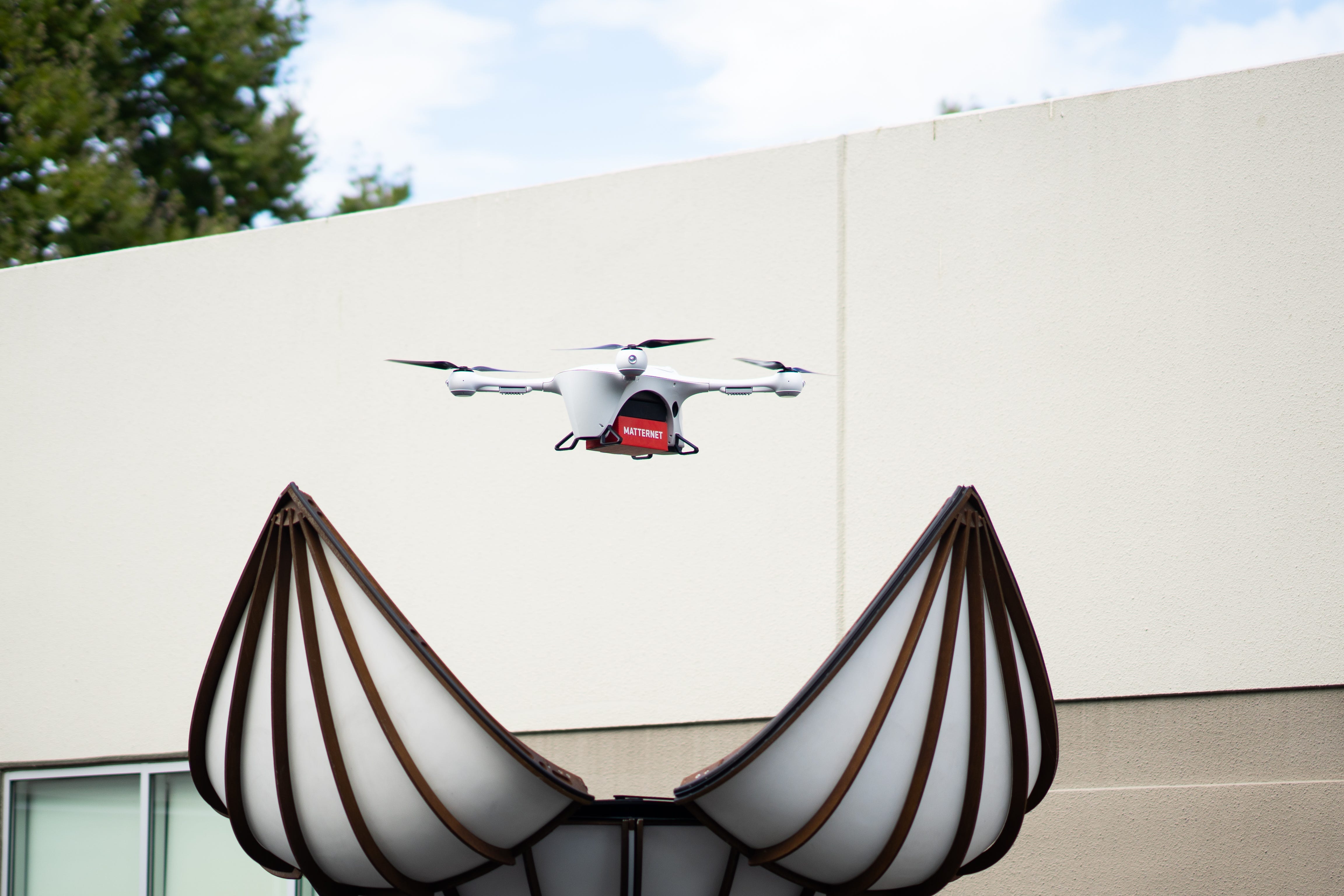
Smaller players are getting on the action too. Matternet is in the process of going public, raising a $33M private placement as it heads towards open trading. The company’s stayed relatively capital efficient - having previously raised only about $80M — while notching a partnership with UPS, and became the first company with an FAA type-certified drone delivery system, initially focused on healthcare before expanding into food and retail.
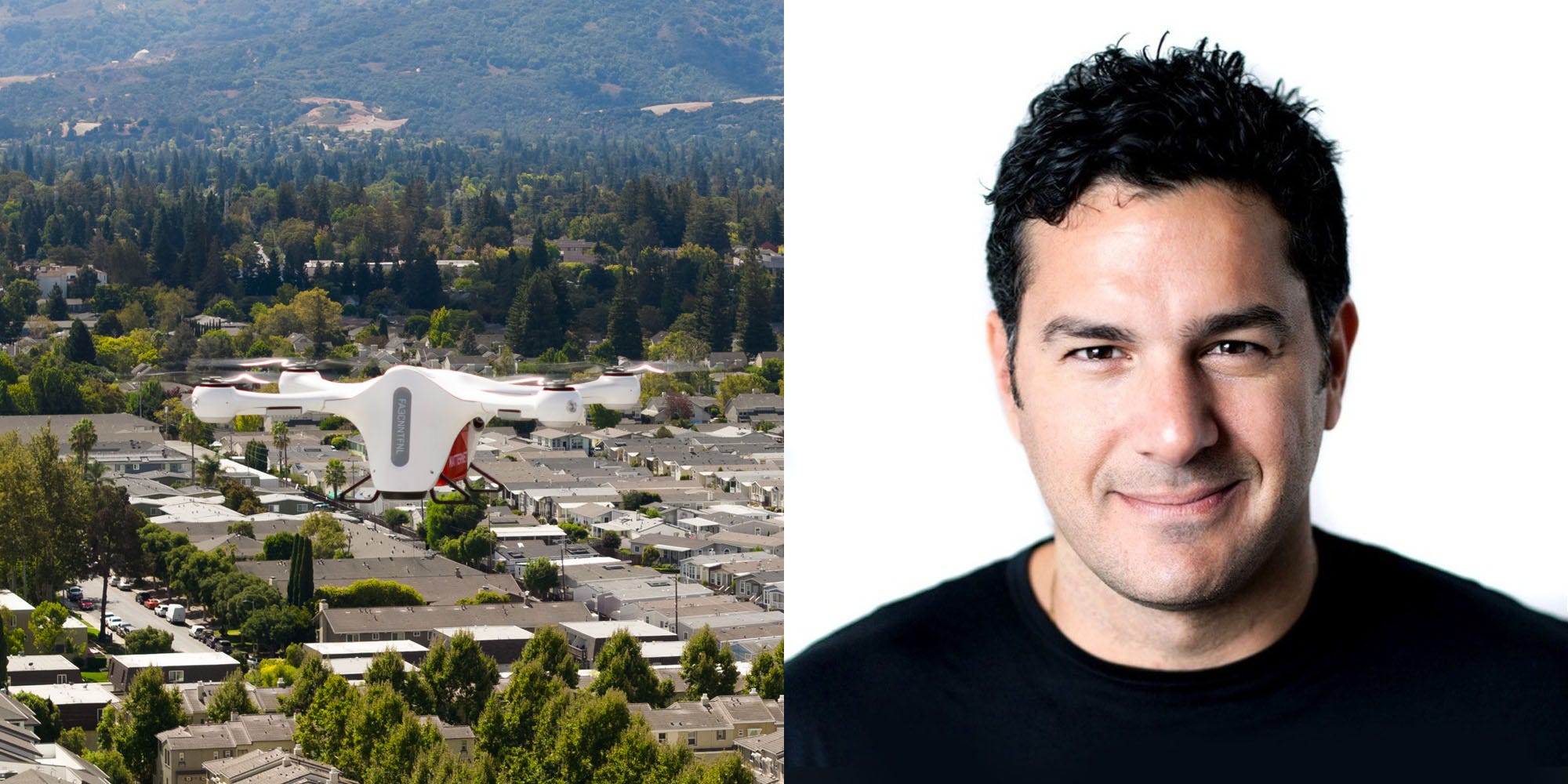
At the center is founder and CEO Andreas Raptopoulos, who’s been building toward this moment since 2011, back when drones were limited to military uses or hobbyist tinkering. In the conversation below — first published on Ottomate — we unpack Matternet’s evolution from humanitarian logistics to urban delivery platform, why he rejects the hub-and-spoke model, how the economics work, and what it might take for drones to move from novelty to utility.
Jonah Bliss: Let’s start at a high level, what’s the Matternet story?
Andreas Raptopoulos: In 2010, I came across what was happening in the DIY drone space. I came into the space with a question, “has something changed in the technology landscape that would allow us to build a different kind of flying vehicle?”
As I started thinking through what was happening, I realized there was a DIY drone movement building up. People were taking sensors popularized through smartphones, computers, GPS units, and creating these tiny quadcopters that could aviate and navigate by themselves.
When I saw that, I thought: this is going to change how the world does transportation—for goods and eventually for people.
That led me to start Matternet in 2011. We were among the first companies to talk about drones as a civilian tool. Back then, drones were mostly associated with the military.
We started by asking: where could this have immediate impact? These systems weren’t permitted in the U.S. or Europe yet—but there were places in the world with no transportation infrastructure at all. So we focused on those.
We did projects in Haiti and the Dominican Republic in 2012, then Bhutan and Papua New Guinea in 2014, and later Malawi. We worked with organizations like Doctors Without Borders, the World Health Organization, and UNICEF.
The idea was leapfrogging: in places without roads, could you skip straight to aerial transport—like how cellular skipped landlines?
For the first few years, up until 2014, we focused entirely on humanitarian work. I gave a talk in 2013—“If there are no roads, there’s a drone for that”—and that really became how people understood what we were doing.
But eventually, I realized humanitarian funding wouldn’t be enough. It was clear we’d need something like $100M+ to build the full technology stack. So we pivoted to commercial use cases.
We entered Switzerland in 2015 and started working with regulators and Swiss Post to figure out how to safely operate drones over cities.
We knew that about 80% of last-mile delivery happens in urban and suburban areas. And something like 85–86% of Amazon shipments are under 2 kg.
So the question became: how do we build a system that regulators and the public trust in those environments?
In 2017, we became the first company approved to fly over cities in Switzerland. We focused first on healthcare—transporting diagnostics, lab samples, and medicines between facilities.
If you look at a system like UCSF, there are dozens of locations moving samples and materials all day. If you can reduce that to 5–10 minutes, it changes efficiency and patient outcomes significantly.
We’ve always been told BVLOS is just around the corner…
Yeah, exactly. And now it finally is here.
We partnered with UPS in 2019 and launched the first commercial drone delivery service in the U.S. A lot of people were doing pilots at the time—but this was a real operation.
Our philosophy is different from most. We don’t want to be UPS—we want to be Apple or Tesla. We want to build the machines and systems that others operate.
So with UPS, we provided the full stack: the drones, the ground infrastructure, and the software. They operated the system.
Then COVID hit, and BVLOS timelines slipped.
But in 2022, we became the first—and still the only—company with a drone delivery system type-certified by the FAA. That process took four and a half years.
About 14 months ago, we launched our first home delivery product. Up until then, we were only doing B2B healthcare. Now we’re expanding into food and retail.
Can you talk a bit about the unit economics, especially outside of healthcare?
In healthcare, we already have positive unit economics. Customers are willing to pay $20+ per delivery, depending on the market.
For food delivery, the target is different. We believe we can get costs well below $5 per delivery, while customers are willing to pay $6–$8.
To get there, a few things matter:
You need volume—around 100 deliveries per day per location
You can’t have people on-site operating drones
You need low-cost, high-utilization aircraft
Think of it in terms of cost per flight hour. If an aircraft costs $20,000 and runs for 10,000 hours, that’s $2 per hour. If you can do 5–8 deliveries per hour, you’re looking at around $0.40 per delivery just for the aircraft.
Then you layer in batteries, real estate, supervision, and maintenance.
What does supervision look like?
The drones are autonomous. The operator isn’t piloting—they’re supervising.
Today, we’re at about 3 drones per operator in commercial operations, 20:1 in testing, and we’re targeting 50:1 or even 100:1. That’s a big lever for reducing costs.
What about the customer experience? Do people need a yard?
Single-family homes are easiest—front or backyard delivery using tether drop.
In apartment buildings, we usually use a designated drop location. The customer comes down to retrieve it. It’s a slight step back in convenience, but faster and cheaper. We’re also exploring locker-based systems.
It seems like part of the model is actually shifting work to the customer.
Exactly. That’s an under-appreciated piece.
Amazon tried ground robots where customers had to come outside—it didn’t work well. But in food delivery, the customer is usually present anyway.
With drones, we have an advantage because we can access private space—like yards—where ground robots can’t go.
How do you compare to competitors like Amazon, Wing, or Zipline?
Amazon isn’t really a direct competitor for us—we don’t see them in deals.
The main players we encounter are Wing and Zipline.
Our differentiation is that we don’t believe in the hub model. We don’t think you should have a separate leg from merchant to drone hub. That hurts both economics and experience. We integrate directly at the merchant.
What about regulation?
We’ve hit an inflection point in the U.S. BVLOS is effectively here—we’re already operating under it. The FAA’s Part 108 rule should formalize it soon.
There are still open questions—security protocols, traffic management—but overall, regulation is no longer the main blocker.
What does this look like by 2030?
I’d estimate 3 to 5 million drone deliveries per day in the U.S.
For consumers, that means:
Faster delivery—maybe 5 minutes from prep
Lower costs—around $5
Better quality—food arrives fresh
For cities, it means fewer cars, less congestion, and lower emissions. The key is that these systems need to be almost invisible—you shouldn’t hear or notice them unless you’re using them.
Anything else we should know?
It’s just an incredibly exciting moment. This is something I’ve been working toward for over a decade. Our long-term vision is global: someone in a remote area could order a system, plug it in, connect it to the network, and instantly have access to aerial logistics.
What we’re building now—in food and retail—is what enables that future.
HOT INDUSTRY NEWS & GOSSIP
Happy birthday, America! No, not Independence Day… we just passed an equally momentous anniversary: the Federal-Aid Highway Act turned 70. Signed by Eisenhower on June 29, 1956, today the federal highway network spans 41,000+ miles and carries about a quarter of nationwide auto traffic. And it had, uhh, zero negative externalities! ;)
Robo-blitz scaling? Waymo is expanding from 11 cities to 15, as it turns on fully driver-free service in San Diego, Las Vegas, Tampa and Denver. The AV co. also began autonomous testing of its Hyundai Ioniq 5s, as it looks to augment its fleet of Jags. Tesla’s Robotaxi service is also expanding, at a rather modest pace. While many headlines are calling this a launch in Miami — conjuring up mental images of beachy high-rises and bustling activity — the actual service area is the low-rise suburbs around West Miami and Coral Terrace, which look like this. And Apptopia has taken a look at the App Store market share of the major AV players, finding that Zoox is biting into Waymo’s marketshare.

Seeing green… With the Feds having torpedoed EV subsidies, California is reviving state-level incentives, albeit in slightly different form from the old CVRP system. The state just allocated $135M in subsidies, $3.5k off new EVs and $1.75k off used ones, with the state paying half at the point of purchase, and participating automakers chipping in the other half. The deal is only good for cars with an MSRP of under $50k, unless the OEM is HQed in the Golden State. It’s nice to see the state getting a bit more creative with using its budget to negotiate with the automakers its subsidizing: we shoveled way too much money at Tesla, Toyota, and GM only to see them backstab the state in various forms. That said, I would maybe expand the program to include international OEMs with their U.S. HQs in California. The CPUC also just approved $20,300 rebates, plus $1,700 in annual charging incentives, for low and moderate income ridehail drivers.
Moto bene! Here’s your chance to buy a cute, tiny car: Stellantis is going to import its pint-sized Fiat Topolino into the U.S. Priced at $13,995, the quadricycle / NEV maxes out at 25 MPH, but what it lacks in range (and airbags) it more than makes up for in cuteness. But if this vehicle looks too darn big for you, head to Switzerland, where the itty bitty Microlino is now available via carsharing.

Bikesharing ambitions lyfted: Lyft announced the planned acquisition of Serveo’s Spanish bikeshare business. This means Lyft Urban Solutions, which runs programs like NYC’s Citi Bike and Madrid’s BiciMad, will take over operations in Barcelona, Bilbao, Valladolid, Zaragoza and more. Hopefully this will put to bed the rumor that Lyft is hoping to exit the bikeshare space, a bit of FUD that’s been used to slow down contract negotiations in markets like LA.
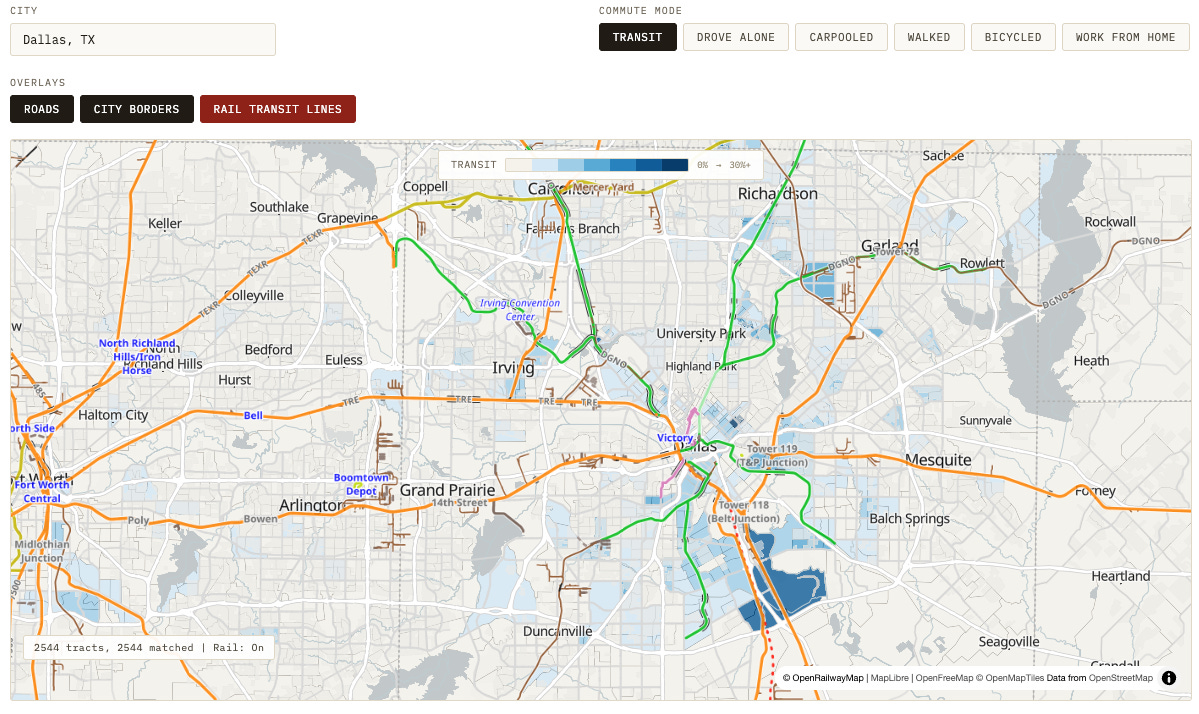
For my fellow cartographic freaks… The Transport Politic’s Yonah Freemark just released an excellent new suite of tools, in his never-ending quest to help visualize transit usage across this fair land. Click around and enjoy looking at modeshare by census tract, VRM by metro area, transit ridership over time, etc.
Good muckraking: LAX’s people mover is now three plus years late, and seemingly zillions over-budget. A new investigative video makes a convincing case that the problem lies with the construction consortium — Fluor, Balfourt Beatty, Flatiron West, Dragados — abusing a flawed contract resolution system, as well as a potential biased single-person project neutral. Shame!
Better transport for NYC: Two must-read reports just came out in the Big Apple. The first — Next Stop: Fast Buses, Better Service — looks to speed up bus service, both by improving local buses and launching true BRT lines. The second — Central Business District Tolling Program: Parking Study — looks at how the city’s congestion cordon has impacted street parking. There was a slight bump in parking utilization near the toll boundaries, but no real rise in “park and ride” behavior near further out stations. Parking spots look to be over-utilized when they’re free, so the city should increase metering and for the love of god finally introduce paid permit districts.


Other countries get the goods: Rennes, France — population 230,890 — plans to improve its metro system frequency to one train every sixty seconds. Meanwhile Peru just finished tunneling for Lima’s second metro line. And Tehran just inaugurated a new station on Line 7, obviously they had nothing else to deal with lately…
Shout out to two cute projects: Meet Vleyr, which is applying the gig work economy to the very NYC-centric issue of moving cars around on alternate-side parking days. And kudos to Greg Rogers on launching Mobility Mayor, a sandbox meant to test the impact of various AV policies in D.C.
A few good links: America has fewer and fewer places to relax and socialize. Southeast Asian mobility and delivery super-app Gojek founder sentenced to ten years in prison. California homicide rate hits historic lows, similar to nationwide trends. China passes new laws to protect gig workers. Cleantech funding holds steady. London freezes bus fares. Street vendors speak out against violence. Autolane launches AV delivery infrastructure. Peak Energy begins construction on sodium-ion battery factory, in Sacramento. Amazon completes millionth delivery via electric cargo bike in Belgium. Bidbus has used car dealers compete for your beater. NYC and LA prepare for flying taxis (file under: speculative.) Sarla finishes first eVTOL flight campaign.
And lastly, thank you to London and New York for coming out to celebrate the mobility community last month!
- Jonah Bliss & The Curbivore Crew