

New York City is making a much bigger bet on curbside EV charging. Brooklyn-based It’s Electric has been selected to deploy 700 curbside chargers across all five boroughs, with the city prioritizing neighborhoods where rideshare drivers and other high-mileage motorists have limited access to off-street charging. The company is also keeping things unusually local: its chargers will be manufactured in Queens by Boyce Technologies.
The contract represents a pretty dramatic step up for a company that installed its first NYC charger just three years ago, at the Brooklyn Army Terminal. Since then, It’s Electric has parlayed those early pilots into projects across the country; raised $15 million from the likes of Halogen Ventures, Uber and PFNYC; and is now preparing to tackle one of the largest and most complicated curbside charging deployments in the country.
There are lessons here for both sides of the public-private partnership. For cities, It’s Electric’s trajectory offers a case study in how small climate-tech pilots can actually graduate into meaningful infrastructure deployments (and local manufacturing jobs). For startups, it’s a reminder that selling infrastructure to cities requires a lot more than building a clever piece of hardware. I caught up with co-founder (and all around friend-of-the-curb) Tiya Gordon to talk about what her company had to prove to get here, why curbside charging still matters in an autonomous future, what comes next and the very on-brand way she’s celebrating the milestone.
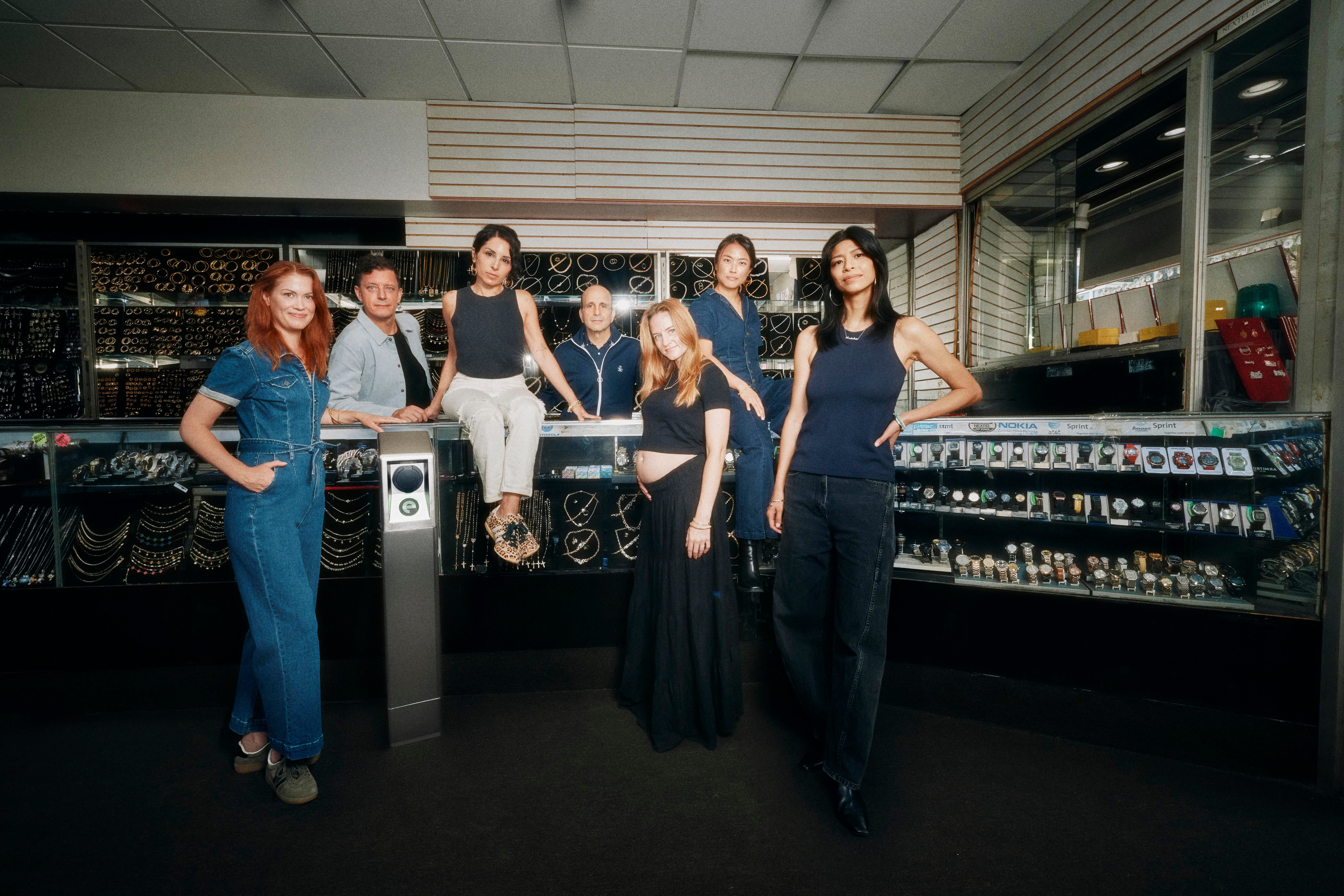
Jonah Bliss: You’ve moved from pilots to being awarded the contracts for Boston, then Philadelphia and now New York. What did you have to prove — technically, operationally, or commercially — to convince New York City you were ready for a 700-charger deployment?
Tiya Gordon: Curbside charging is a specialization. If I say nothing else, I think we’ve now proven (against our competition) that to make curbside work, you have to do a lot more than just provide a hardware solution. We came to New York City, not only with our hardware design, but with: our team of planners and government affairs experts; with Maverick Engineering, the best in class as our installation partner; and with a value proposition to now manufacture the chargers right here in New York City with Boyce Technologies creating a strong economic opportunity for the city as well.
NYC set the electrification target and this contract is the culmination of years of work in service of that goal.
The city is prioritizing neighborhoods with large numbers of TLC and rideshare drivers and limited off-street parking. How did that influence the way you designed the network and the charging experience?
The city’s Green Rides initiative requires that all Uber and Lyft trips licensed by the New York City Taxi and Limousine Commission (TLC) be electric or accessible by 2030, part of a broader push toward an 80% reduction in greenhouse gas emissions by 2050 under OneNYC, the city’s blueprint for climate resilience. It’s Electric’s buildout lays the foundation for a physical infrastructure needed to reach this target.
More accessible charging is critical to helping rideshare drivers make the switch to electric as they cover significantly more miles than the average motorist, so expanding charging where they actually need it can deliver outsized benefits for air quality while strengthening the city’s charging network for everyone.
Parking behavior confirms the market fit: 54% of Uber EV drivers park on street parking near their residence at night (vs. 29% of non-EV drivers), and only 36% have driveway/garage access — meaning the majority of the rideshare EV driver population already relies on on-street parking and is the natural curbside L2 customer.
Many in the EV space are setting their sights on autonomous vehicles. Is there a path where your chargepoints become infrastructure for AVs that need a place to recharge?
For humans, curbside L2 is the unlock: Uber has explicitly identified curbside charging as the critical infrastructure needed to expand EV ownership among urban ridehail drivers who lack private charging access — which is why Uber partnered directly with It’s Electric.
The core thesis: for rideshare drivers, time is money. L2 overnight charging fits their natural parking behavior and protects earnings in a way that daytime DCFC stops simply don’t.
AKA, fast charging is not a panacea.
If you look at the numbers there are 80,000 Rideshare drivers in NYC - and they need to be majority electric by 2030.
Back to AV… If the supposition that if/when ridehail are all AV they then will ALL drive (autonomously) out to Jersey (!) every night would be equivalent to 26 hours straight of traffic through the Holland Tunnel (seriously, ask Claude).
So the same challenges that CURRENTLY exist to charge human driven cars, will persist when the cars become autonomous.
And the answer will be also the same need charging in the cities, where these vehicles are serving rides.
You’ve made local manufacturing a meaningful part of the company’s strategy, with chargers for markets beyond New York being built in Queens. Why was owning that part of the supply chain important to you?And what have you learned since your first pilot at the Brooklyn Army Terminal in 2023, and what can other entrepreneurs building on the city’s Climate Innovation Pilot Program learn from your experiences?
The chargers designed by It’s Electric, which is headquartered in Brooklyn, will be manufactured in Queens — meaning the infrastructure for the city’s clean transportation future will be entirely made in New York, making it the epicenter of transportation innovation.
Designing and manufacturing chargers in Queens positions the company as a driver of local economic development, creating not only construction, but manufacturing jobs by keeping the supply chain for the city’s clean energy transition firmly inside the five boroughs.
The relevance of the green economy resonates deeply going back 2023 when It’s Electric worked with the NYC Economic Development Corporation to build its very first pilot in Sunset Park Brooklyn at the Brooklyn Army Terminal. That pilot, the first of its kind, became known as “Pilot Zero” for the city’s brand new Climate Innovation Pilot Program (now known as Pilots at BAT).
This is really important to us as it allows us to complete the circle for EDC from that very first pilot as EDC is also responsible for The NYC Green Economy Action Plan (GEAP) which is a comprehensive roadmap to establish New York City as a global leader in “green-collar” jobs and climate tech innovation. Originally unveiled in early 2024, the plan outlines 63 city commitments aimed at combatting climate change while driving equitable economic growth. Its core objective is to host 400,000 green economy jobs by 2040 (up from a baseline of 133,000) and generate $89 billion in gross metropolitan product.
The company has raised $15 million since inception; pulling in an oversubscribed round in this capital environment is quite impressive! How has the story you tell investors changed from your earliest rounds to this one? What sort of narrative helped make this “click” in a world where so many other clean-tech startups are faltering?
It’s a hard truth that this is a really challenging environment to be raising - especially across 2026 when raising for anything electrification was politicized to the point of no return. But… when the Trump administration attacked Iran, and oil spiked, I joked to energy investors that if this turns the industry around, I will get a tattoo of the Strait of Hormuz.
I just got that tattoo.
What does this capital specifically allow you to accomplish over the next 12–24 months, and what milestones are most important during that period?
The capital allows us to operationalize NYC and Philadelphia (while continuing our project development for other key cities that were already in the mix such as LA, SF, DC and Boston)
This also readies us for our first international expansion.
If the NYC deployment is successful, what does it unlock for It’s Electric? Is the bigger opportunity expanding much further within New York, using NYC as a model for other cities, or something else entirely?
This changes the conversation. As far as I am concerned, no one else can ever ask, “But will cities want curbside charging?”
People will now only ask which cities are next.
HOT INDUSTRY NEWS & GOSSIP
Self-driving SPAC: Ahh, the market might be getting frothy again, as it looks like SPACs are back in a big way. Autonomous ridehailing startup May Mobility is merging into ACP Holdings Acquisition Corp, raising at least $120M at a $1.4B valuation. May Mobility counts Toyota, Uber, Lyft, Grab, NTT, ECARX and CaoCao as partners and has completed 550,000+ commercial autonomous rides.
Delivery wars, Costco edition: America’s three or four big 3PDs continue their land grabs, hoping to lock up every meaningful retailer and restaurant chain. For years, mega-retailer Costco was exclusive to Instacart, but Uber and DoorDash just announced new partnerships with the big box chain. In a bit of competitive drama, both announcements were originally planned for this morning, but Uber pushed theirs ahead by a day on Wednesday.
Wonder-ful robotics: Wonder deployed its first Infinite Kitchen automated bowl makeline in Midtown Manhattan, a bit less than a year after buying the technology from Sweetgreen. The machines can make 500 bowls per hour, supporting the multiple brands that Wonder houses in a single location. The company also announced that its selling its Grubhub Campus Dining business to DoorDash for $300M, and that DD invested in an extension of Wonder’s recent Series D. The campus biz, borne out of GH’s $150M purchase of Tapingo in 2019, operates at 450+ colleges, and is one of the main platforms for the delivery bots you see all over unis these days.


Last mile’s little helpers… Lyft released its 2026 Multimodal Report, highlighting how its bike and scooter sharing systems work in cities. Some of the most impressive stats get to how much micromobility can be a true complement to transit: 49% of commute-hour rides on the Lyft platform in NYC are on Citi Bikes, 69% of Lyft’s micromobility customers take transit at least once a week, and 81% of riders have used shared micromobility to get to or from public transit.
Speaking of scooters! Industry behemoth Segway Ninebot rolled out its latest hardware at a flashy event in Changzhou, China. The company rolled out its new C-Series e-bikes, R1 electric scooters and perhaps most interesting of all: the F100, its first delivery e-bike.
What’s up, dock? Sometimes, simple is best. Delivery drone startup Flytrex has unveiled a new dock, meant to be installed at partners restaurants and retailers, and it’s rather prosaic looking. Instead of some fancy, mechanical silo for capturing drones and loading goods, it’s basically a static overhang, designed to clip on to the side of a building, from which the whirlybird lowers a winch. Updates to the company’s routing logic also mean it plans to position devices at restaurants before an order comes in, speeding up delivery times.
Modern Delivery, summer break quick hits: Papa Johns hopes new tech will drive turnaround. DoorDash partners with NFL. Swish raises $24M. Deliveroo partners with Hotel Chocolat. John Woyton joins Delivery Hero board. Yelp adds voice AI for restaurant hosts. Amazon ups wages. Prosus leads investment round into Emilia AI. South Korea’s Yogiyo looks for buyers. Just Eat exits Israel. Neolix AV vans head to Japan. Amazon to expand same-day delivery footprint. Zipline eyes new round at $20B valuation.
What’s in a name? A few months after their merger, Nexar and Nauto are rolling out their combined branding: meet Empiric Earth. What started as dash cams for ridehail drivers is now 350,000+ connected devices, logging billions of miles for AV and new mobility safety data.
A few good links: Feds hike interest rate. Uber adds new features for seniors. Monterey starts workforce training for air taxis. Key financing deadline looms for Brightline West HSR. Talk about jilted lovers… ExxonMobil eyes return to Venezuela. Walmart+ adds CITGO benefits (anyone else remember who owns CITGO?) Lucid partners with Bolt. ETSC partners with Wolt. Grab buys Atome Financial, expands AV fleet. SacRT adds infill station in Sacramento’s redeveloping River District (now let’s add some frequency to that service!) A primer on LA’s street vending rules. Santa Monica approves red light cameras. Oli Robotics’ coffee bot launches in SF. Added battery capacity means California blackouts are a thing of the past. California TNC driver union certified. LA D Line extension openings on track for 2027. OC buys back 1,000 illegal e-bikes. Waymo expands to Vegas. Exein raises $270M for physical AI cybersecurity. Bus and road safety improvements continue to suffer in Boston (H/T to JW for this great primer on the subject.) VinFast plans cheap, small SUV for India. Q2 TNC driver pay trends. San Diego lobbies for more local control over AVs. NHTSA ups investigation into Cybercab.
See you in Austin!
- Jonah Bliss & The Curbivore Crew