

As robotaxis and self-driving cars continue to fill America’s streets and cities, a few important questions remain unanswered, especially at the intersection (no pun intended) of tech and policy.
Last month’s power cum Waymo outage in San Francisco is an instructive example. To what degree should an AV operator’s disaster preparedness plan be made public? Should a self-driving car’s behavior when it reaches an inoperable traffic light be something decided by each tech company, or should regulators set a standard?
Relatedly, how should remote operations — when a human outside the vehicle steps in to make a decision for the computer — be regulated? It’s still an open question if that teleoperator needs to be located in the same state as the AV, if they have to have passed a background check, or even if they must possess a driver’s license.
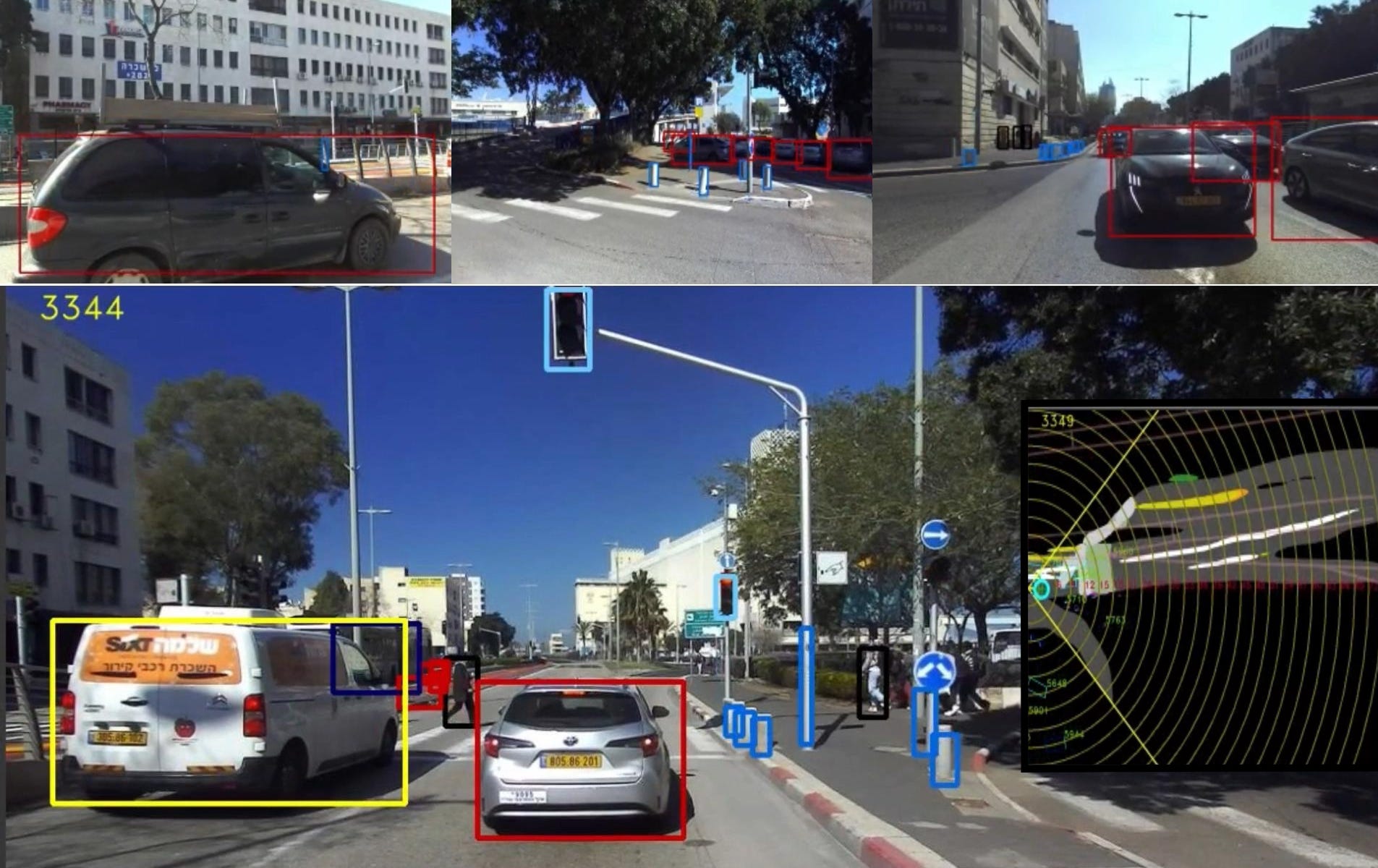
Yet another debate rages around mapping. Should each AV service be required to create HD maps of a service area? On one hand, that hyper precise imaging, laden with semantic detail, offers the computer a level of nuance on each inch of terrain that no flesh-bound mind could possess. But those arguing for a mapless approach think it’s actually safer to have a car that can automatically navigate anywhere, speeding up not just deployments but perhaps better preparing for inevitable changes to mapped landscapes.
To get to the bottom of that last quandary, our team at Ottomate recently sat down with Eran Ofir, CEO of Imagry, to hear his case for why a mapless approach may let AVs truly drive like a human. Give it a read.

URBAN AUTONOMY SUMMIT — 1/28 IN SAN FRANCISCO

Our invite-only Urban Autonomy Summit, presented by Nexar, is shaping up to be a truly peerless gathering of the AV sector’s most pivotal public and private sector players. I encourage you to apply to attend, as we collaborate to solve the industry’s most pressing questions. Speakers include:
Jeremy Bird — Executive Vice President, Lyft
Xiaodi Hu — CEO & Founder, Bot Auto
Ashwini Anburajan — CEO, Obi
Jeffrey Tumlin — Former Director of Transportation, SFMTA
Neha Palmer — CEO, Terawatt
Jon Miller — CBO, Nexar
Ryan Green — CEO & Co-Founder, Gridwise Analytics
Matt Wood — VP of Safety and Validation, May Mobility
Ashu Rege — Vice President of Autonomy & Head of DoorDash Labs, DoorDash
Rachel Swan — Transportation Reporter, SF Chronicle
Claire Eagen — Global Head of Legal, Vay
Erin Galiger — Director, North American Markets, Rocsys
Lora Kolodny — Tech Reporter, CNBC
Rya Jetha — Tech Culture Reporter, SF Standard
Jonathan Colbert — Head of Marketing, Voltera

HOT INDUSTRY NEWS & GOSSIP
Transit slowdown: What do we have to look forward to in 2026? The Transport Politic has mapped out all the forthcoming public transit projects in the USA, which in typical North American fashion is a pittance compared to the rest of the world. While locales as varied as Kansas City, Baton Rouge and Ottawa are getting new rail or BRT extensions, most of the action is concentrated in SoCal. Los Angeles will get 3.9 miles of heavy rail subway and 2.3 miles of automated people mover, while nearby Orange County gets a 4.2 mile streetcar / LRT and even the Inland Empire is getting a 19 mile bus rapid transit line.
More on the tribulations of self-driving cars: Andrej Karpathy, former Senior Director of AI at Tesla, seems to have converted from an AV optimist to a self-driving pessimist. He thinks Tesla’s current approach is a dead-end, and finds the limited fleet sizes of the big robotaxi-ers to be a sign that they too haven’t fully figured out all the rules of the road. But perhaps even more harrowing is his declaration that “I don’t think Elon has any credibility at all, on anything” and that “I don’t trust Tesla not to cover up crashes, or silence victims, or critics, or journalists, or use the Trump administration’s corruption to avoid sensible oversight from regulators.”
For whom the congestion tolls: With 2025 in the rearview mirror, we can look back at NYC’s deployment of a congestion pricing cordon and call it an unmitigated success. 27 million fewer cars entered the Manhattan CBD, travel times improved by 4.5%, injuries are down and public transit got $550 million in new funding. But seemingly a handful of people in Queens are still mad about it.

Téléphérique magnifique: Paris inaugurated Le Câble 1, a 2.8 mile aerial cable car line that links neighborhoods in its isolated southeastern suburbs with the nearest metro station. Meanwhile, LA’s wise local leaders are busy fighting a proposal that would build a similar system for free. Surely Paris could learn a thing or two from us about public transit!
Suburbivore? It’s looking like some CBDs might truly never recover from their Covid-related exoduses (exodi?) Downtown Dallas is the latest locale to suffer a blow, as AT&T is moving its HQ, with thousands of workers, to a suburban campus 20 miles away. Of the 21 Fortune 500s based in Dallas-Ft. Worth, now only one will actually be located in Downtown Dallas. AT&T opted for Plano, while other low-density ‘burbs like Irving are even more popular.
Hooray for micro-cars! Our friends at Bingo Tech just unveiled the E2, meant to combine a tiny footprint with swappable batteries, to make ridehailing more affordable in emerging economies. Meanwhile, China’s Neolix is taking its autonomous, golf-cart size delivery vans to the winding roads of Europe.

Wondering about Wonder: Marc Lore’s food tech startup Wonder appetite for zany new ideas seems almost limitless. Hot off acquiring Infinite Kitchens from Sweetgreen, the founder of Diapers.com is now promising to unveil something called Wonder Create, which would let any entrepreneur “Use Wonder’s software to hatch a restaurant brand and recipes. These recipes can be programmed into Wonder’s automated kitchens, which will make and then sell them through the Wonder app.“ I was delighted to chat with Bloomberg’s Joshua Brustein as he was working on this must-read piece.
A few good links: NYC Mayor Mamdani names Michael Flynn as head of DOT — good luck making the busses free! Uber eyes acquisition of parking rez app SpotHero. OEM execs predict a tough year for car sales. Grab trials drone deliveries in Singapore. Amazon acquires Rightbot in bid to improve logistics automation. I hate to say I agree with Matt Yglesias — but Dems should focus on curtailing oil consumption, not local energy production (as true in California as it is in Pennsylvania.) DoorDash beefs up advertising platform. Sao Paulo to get two new light rail lines. TYLin releases Freight Decarbonization Playbook.
Don’t forget to score your Curbivore tickets and to apply to attend the Urban Autonomy Summit!
- Jonah Bliss & The Curbivore Crew