


Some days it feels like insurance is devouring the entire mobility economy, with rising premiums taking down transportation options new and old alike. Auto insurance premiums have jumped a whopping 64% in the past five years, driven partially by a labor shortage but even more by the fact that cars have become computers on wheels, and your average sensor + chip stack doesn’t take kindly to being in a fender bender. Re-calibration of driver assistance systems in late model cars has quickly climbed to 36% of total repair estimates, averaging around $1.2-2.5k per claim.
While this can be a headache for individual car owners, collectively it can be the death knell for a fleet or shared operator. Last week, Zipcar announced it was shutting down its Boston HQ, as owner Avis streamlines its carsharing arm into its larger operations; this comes after its slow retreat from once-promising markets like the U.K.
New entrants aren’t immune from these challenges either. While robotaxi operators are aiming to be safer than human drivers, they’ll need to rack up years of driving data to realize those risk-adjusted pricing benefits. In the meantime, fixing the damage to a $100k+ AV is going to be a lot spendier than when a human TNC driver decides the 10th little dent on his or her old Camry isn’t even worth getting buffed out.
There are, of course, things that both regulators and corporate actors can do to ameliorate these issues. On today’s podcast, I chat with Ed Walker, Practice Leader of Shared Economy, New Mobility and Autonomous Vehicles at Hub International, about recent state level reforms, like California’s SB 371, or a new bill in the works in Florida, that should help bring some relief to insurance prices. He and I also dig deep into what steps mobility startups can take, especially as they’re getting off the ground, to bake in the best practices that should lead to lower costs over the course of their businesses.
Elsewhere on the pod: Greg, Athena and I jump in to the market’s reaction to Lyft and Uber’s latest earnings, Waymo’s latest fundraising haul, Uber Eats’ foray into Turkey, and how Jamaica is using drones to recover from Hurricane Melissa. Do tune in!

HOT INDUSTRY NEWS & GOSSIP
Lowered Lyft: Lyft posted its FY2025 results, and much like with Uber the week before, the market was not impressed. Gross bookings rose 15% to $18.5 billion and revenue climbed 9% to $6.3B for the year, but the company posted an unexpected $185 million operating loss for Q4, sending the stock down 15%. Lyft has been slowly raising prices lately, causing its growth rate to decelerate, as users hop to the competition. The company is seeing some gains from targeted investments like its Lyft Silver program for seniors; maybe its new push to allow for teenage riders will be another small win?
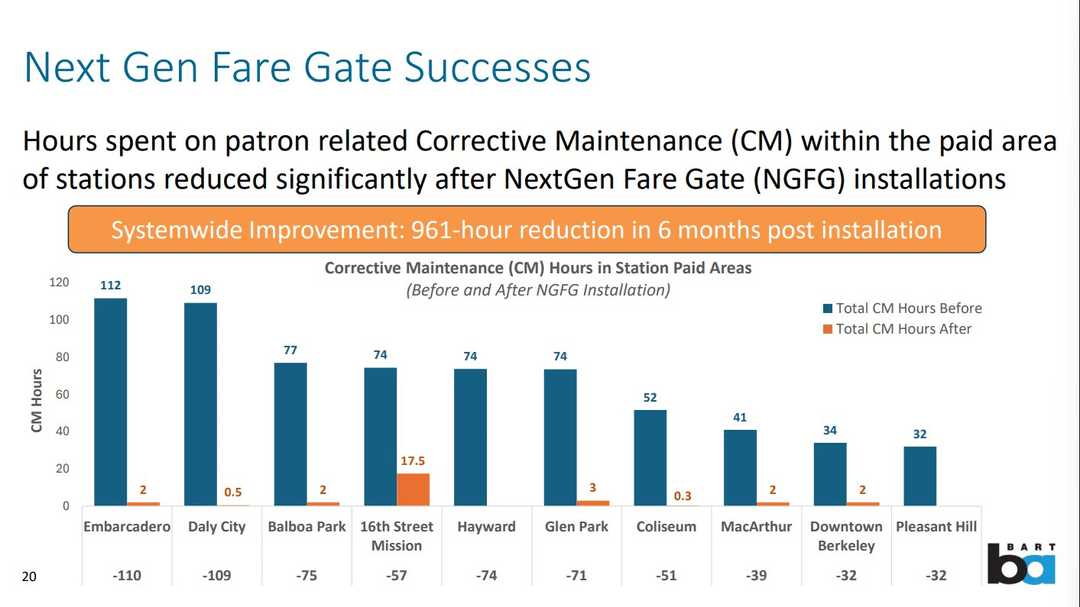
Another reason why free transit is bad policy: BART recently rolled out new fare gates, aiming to make it much more difficult for non-paying riders to access its metro system. Not only have the gates led to more revenue through improved compliance, they’ve reduced maintenance costs, as they keep out the small number of folks that tend to cause the most expensive damage. The transit agency is currently staring down an existential funding shortage that could result in a 63% reduction to services.
Self-driving partisans? Republicans in the U.S. House pushed the SELF DRIVE Act through the Energy and Commerce’s Subcommittee on Commerce, Manufacturing, and Trade, after losing the one Democrat that had previously backed the bill. The legislation would override state attempts to regulate AVs and is currently getting flack for questions about how it handles insurance and data-related issues.
Uber makes its case for AV dominance: Uber released a supplement to its Q4 earnings, laying out its case for why the company thinks it’s well positioned to win the robotaxi race. The whole doc is worth a gander, but some interesting stats: new riders grow by 9 percentage points when Uber launches AVs in a metro; Uber claims it gets better vehicle utilization and lower ETAs than first-party AV platforms; and by mixing both human machine drivers it can better serve both peak and trough demand periods. (I will take issue with a bit of the data cherry picking: for example they call out the density of certain cities by their municipal boundaries, as opposed to the actual sub-regions served by AV providers.)

Now this is how you build transit: Lattes, a small town near Montpellier, France, just inaugurated a new tram line extension. Construction costs came in at about $54 million per mile, and trains will arrive every five minutes at peak.
This week in banana republic shenanigans: New York State and the feds are currently duking it out on whether funding for the $16B Gateway tunnel project needs to be restored. But evidently there’s a much simpler solution that’s been floated… the President just wants Dulles Airport and Penn Station named after him, and in exchange he’ll release federal funds. Quod placuit principi, habet vigorem legis!
Good kitty! Just two global cities see humans sharing their terrain with large cats: Mumbai has leopards, while Los Angeles has cougars (aka puma, mountain lion, catamount, or panther.) Southern California is now almost finished constructing an important piece of infrastructure — the Wallis Annenberg Wildlife Crossing — that will improve connectivity for big cats moving about the region’s myriad mountains. Complete streets are just as important for those with four legs! (Here’s the location on Google Maps, for you cartography geeks.)
A few good links: Skyryse raises $300M for aviation automation. Mitra EV raises $27M for commercial fleet electrification. New data shows that upzoning improves regional housing affordability, but it takes a few years before builders truly start building. Toronto opens Line 5 LRT, which is thankfully much more grade-separated than Line 6. Grab and Hesai collab on lidar. Scott Painter talks TrueCar turnaround. How San Jose sped up its buses (hint: cameras!) Alberta aims to reform insurance market. Cuba runs out of jet fuel. Buffalo’s light rail expansion clears EIS hurdles. Why Minnesota’s Northstar commuter rail was doomed to fail. San Diego County looks to spend $125B on mobility over next quarter century. LA traffic fatalities inch downward, but still a far way from Vision Zero. Reduced immigration whacks state-level growth rates. NLRB decides to regulate SpaceX like an airline or railroad, in move that will make employee strikes more difficult. How to reduce speeding. LA Climate Week to host Designing our Climate Future, Together webinar on 2/25. Flipkart eyes entry into India’s food delivery market. Infinite Machine partners with Bloom. EPA repeals rule that let it fight climate change. (And a H/T to the good folks at Automotive Ventures for supplying some of those repair cost citations.)
Don’t forget to score your Curbivore tickets!
- Jonah Bliss & The Curbivore Crew


